
Gulong.ph Team Member
Tire Pressure Guide: Tamang PSI ng Gulong | Gulong.ph
Kailan ka huling nag-check ng tire pressure ng sasakyan mo? Kung hindi mo na maalala, don’t worry, hindi ka nag-iisa. Maraming car owners sa Pilipinas ang hindi sure kung ano ba talaga ang tamang PSI ng gulong nila.
Pero ang totoo, getting your tire pressure right can help you save fuel, extend the lifespan of your tires, and keep your drive safer. Kapag tama ang hangin ng gulong, mas stable ang handling, mas even ang tire wear, at mas kampante ka sa biyahe. Tandaan din na minsan magkaiba ang recommended PSI ng front tire at rear tire, especially kung iba ang weight distribution ng sasakyan or may mabigat kang dala.
Bakit Importante ang Tire Pressure?
Tire pressure is one of the simplest tire checks, pero malaking impact nito sa safety, fuel efficiency, and tire lifespan.
Kapag mali ang PSI ng gulong, pwedeng maapektuhan ang braking, handling, comfort, and overall performance ng sasakyan. Kaya dapat regular itong chine-check, especially before long drives or kapag may additional weight sa sasakyan, tulad ng passengers, luggage, or cargo.
What is Tire Pressure?
Tire pressure is the amount of air inside your tire. Usually, sinusukat ito in PSI, which means pounds per square inch. Your vehicle may have different PSI pressure recommendations depending on the tire position, load, and vehicle type. Kung hindi ka sure sa tamang PSI, always check your driver-side door sticker, owner’s manual, or use a reliable pressure calculator as a quick guide before adjusting your tires.
Ano ang PSI?
PSI is the measurement used to show how much air pressure is inside the tire. Every vehicle has a recommended PSI, and hindi ito pare-pareho for all cars.
For example, iba ang recommended PSI ng sedan, SUV, van, or pickup. That’s why important na sundin ang recommended tire pressure ng vehicle mo, not just a random number.
Bakit Importante ang Tamang Tire Pressure?
Tamang tire pressure helps your tires make proper contact with the road. This can improve grip, braking, ride comfort, and fuel efficiency.
Kapag tama ang PSI, mas pantay din ang wear ng gulong, which can help your tires last longer.
Ano ang Mangyayari Kapag Mali ang Tire Pressure?
Kapag mali ang tire pressure, either kulang sa hangin or sobra sa hangin, pwedeng magkaroon ng issues sa performance and safety.
Underinflated Tires o Kulang sa Hangin
Kapag kulang sa hangin ang gulong, mas malaki ang contact ng tire sa road. This can make the tire work harder and create more heat.
Possible effects ng underinflated tires:
- Mas mabilis mapudpod ang gilid ng gulong
- Mas mabigat i-drive ang sasakyan
- Mas mataas ang fuel consumption
- Mas prone sa tire damage
- Mas delikado during long drives
Overinflated Tires o Sobra sa Hangin
Kapag sobra naman ang hangin, mas maliit ang contact area ng tire sa road. This can affect grip and comfort.
Possible effects ng overinflated tires:
- Mas mabilis mapudpod ang gitna ng tread
- Mas matagtag ang biyahe
- Mas mababa ang road contact
- Mas prone sa impact damage
- Pwedeng maapektuhan ang braking and handling
Saan Makikita ang Recommended Tire Pressure?
Ang tamang PSI ng gulong mo ay hindi hinuhulaan. May recommended tire pressure ang vehicle manufacturer, and ito ang dapat mong sundin.
Driver-Side Door Sticker
Usually, makikita ang recommended PSI sa sticker sa loob ng driver’s side door. This label may show different PSI for front and rear tires.
Vehicle Owner’s Manual
You can also check your vehicle owner’s manual. This is helpful kung wala na ang door sticker or hindi mo ito makita.
Fuel Cap Label
Some vehicles also place tire pressure information near the fuel cap. Check this area if wala sa driver-side door.
Bakit Hindi Dapat Basta Sundin ang PSI sa Tire Sidewall?
The PSI printed on the tire sidewall usually refers to the maximum pressure the tire can handle, not the recommended tire pressure for your specific vehicle.
For daily driving, always follow the vehicle’s recommended PSI from the door sticker, manual, or official vehicle guide.
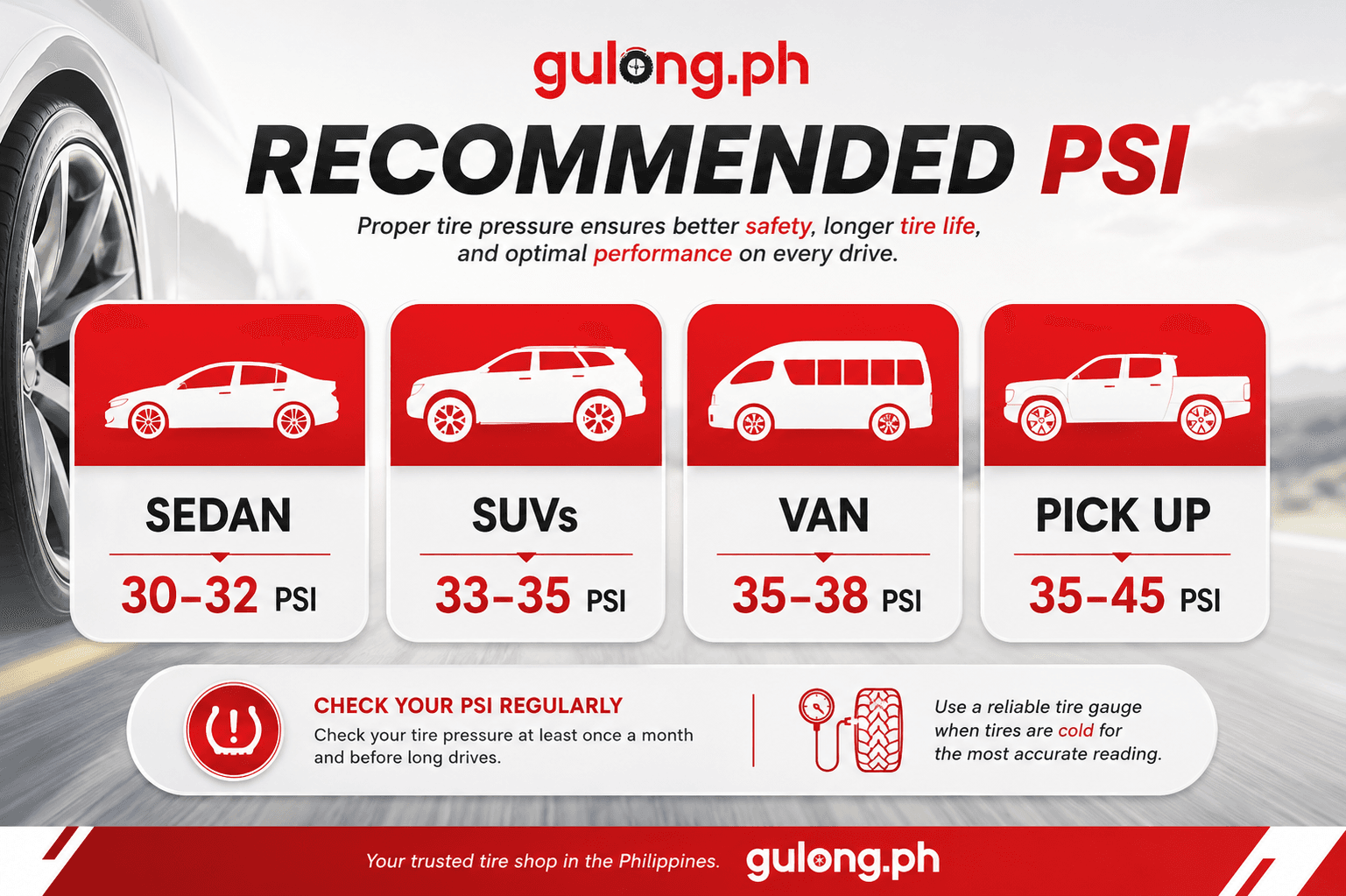
Quick Guide for Normal Tire Pressure
Here’s a general guide for common tire pressure ranges. Use this only as a quick reference, not as a replacement for your vehicle manual.
- Sedan: 30–32 PSI
- SUV: 33–35 PSI
- Van: 35–38 PSI
- Pickup: 35–45 PSI
Important Reminder
Always confirm your exact recommended PSI using your car’s door sticker or owner’s manual. Tire pressure can vary depending on vehicle model, tire size, load, and driving condition.
When and How to Check Your Tire Pressure
Regular checking is key para safe, tipid, and hassle-free ang biyahe.
When Should You Check Tire Pressure?
Check your tire pressure:
- At least once a month
- Before long drives
- Before out-of-town trips
- Kapag nagbago ang weather
- After tire replacement
- After tire rotation
- Kapag parang mabigat or matagtag ang ride
Check Tires When Cold
Best mag-check ng tire pressure kapag cold tires. Ibig sabihin, hindi pa nagagamit ang sasakyan for a long drive.
Kapag mainit na ang gulong after driving, pwedeng tumaas ang PSI reading, so hindi na siya as accurate.
How to Use a Tire Pressure Gauge
Here’s a simple way to check:
- Remove the valve cap.
- Attach the tire pressure gauge.
- Read the PSI.
- Compare it with the recommended PSI.
- Add air if kulang.
- Release air if sobra.
- Put the valve cap back properly.
Signs Na Mali ang Tire Pressure ng Gulong Mo
Sometimes, you can feel when your tire pressure is not right. Watch out for these signs.
Mas Matagtag ang Biyahe
If your ride feels too harsh or bouncy, possible na sobra ang hangin ng gulong.
Mas Malakas sa Gasolina
If your tires are underinflated, your car may need more effort to move, which can increase fuel consumption.
Hindi Pantay ang Pudpod ng Gulong
Uneven wear can be a sign of wrong tire pressure, wheel alignment issues, or tire rotation problems.
Mas Mabigat I-Maneho ang Sasakyan
Kapag kulang sa hangin ang tires, the car may feel heavier to steer or drive.
Madalas Bumaba ang Tire Pressure
If one tire keeps losing air, possible puncture, valve issue, or slow leak. Have it checked as soon as possible.
Tire Pressure Tips for Safer Driving
Keeping your tires properly inflated is a simple car care habit that can help prevent bigger problems.
Check Before Long Drives
Before going on expressways, out-of-town trips, or long weekend drives, always check your PSI. This helps reduce the risk of tire issues habang nasa biyahe.
Include Your Spare Tire
Don’t forget your spare tire. Kahit hindi siya ginagamit daily, kailangan pa rin siyang may tamang pressure para ready in case of emergency.
Recheck After Tire Replacement or Rotation
After replacing or rotating tires, check the tire pressure again. This helps make sure all tires are properly inflated and ready for daily use.
Don’t Wait Until the Tire Looks Flat
A tire can already be underinflated even if it does not look flat. Use a tire pressure gauge instead of relying only on visual checking.
Next Step from Gulong.ph
Check your tire pressure today. It only takes a few minutes, pero malaking tulong ito for safer, smoother, and more fuel-efficient driving. Kung unsure ka kung ilang PSI ang bagay sa sasakyan mo, check your door sticker, owner’s manual, or ask a tire professional for guidance.
Proper tire pressure helps extend the life of your tires, pero kung worn out na ang gulong mo, mas safe na magpalit kaysa ipilit gamitin. You can shop online at Gulong.ph or visit the Gulong.ph shop to compare tires that fit your vehicle. For trusted tire options, explore Michelin and BFGoodrich for safer and smoother everyday driving.
FAQs (Frequently Asked Questions)
1. Kailangan bang i-check ang spare tire?
Yes. Your spare tire should also be checked regularly so it is ready in case of a flat tire or emergency.
2. Ano ang tamang tire pressure ng kotse ko?
The correct tire pressure depends on your vehicle. You can usually find the recommended PSI on the driver-side door sticker, fuel cap label, or vehicle owner’s manual.
3. Gaano kadalas dapat mag-check ng tire pressure?
Check your tire pressure at least once a month, before long drives, and when there are major weather changes.
4. Kailan best mag-check ng tire pressure?
Best mag-check kapag cold tires, meaning hindi pa nagagamit ang sasakyan for a long drive. This gives a more accurate PSI reading.
5. Ano ang mangyayari kapag kulang sa hangin ang gulong?
Underinflated tires can wear faster on the edges, make the car harder to drive, reduce fuel efficiency, and increase tire damage risk.