
Gulong.ph Team Member
Tire Rotation Guide: Kailan Dapat Mag-Rotate? | Gulong.ph
Alam mo ba? Kahit bago pa ang gulong, kung hindi mo ito napa-pa-rotate regularly, pwedeng hindi pantay agad ang pudpod. That means sayang ang pera, sayang ang gulong, at possible na maapektuhan ang safety ng biyahe mo.
Ang tire rotation ay isang simple but important part of tire maintenance. It helps keep your tires wearing evenly, para mas safe, mas smooth, at mas sulit gamitin ang buong set ng gulong mo.
For most drivers, a good rule is to rotate tires every 10,000 km or based on your vehicle owner’s manual.
Bakit Importante ang Tire Rotation?
Maraming drivers ang focused sa tire pressure or tread depth, pero nakakalimutan ang tire rotation. In reality, kasing importante rin ito ng ibang regular car maintenance habits.
Sa Pilipinas, araw-araw mong kalaban ang traffic, lubak, matinding init, biglang ulan, at rough roads. Dahil dito, hindi pantay ang stress na natatanggap ng bawat gulong.
Iwas Uneven Tire Wear
Hindi pare-pareho ang trabaho ng bawat tire. For example, sa maraming sasakyan, mas mabilis mapudpod ang front tires dahil sila ang mas involved sa steering, braking, at vehicle control.
Kapag hindi mo pina-rotate ang tires, pwedeng isang pair lang ang mabilis mapudpod habang okay pa ang iba.
Mas Safe ang Braking at Handling
Pantay na tire wear means mas stable ang grip ng sasakyan. Kapag uneven ang pudpod, pwedeng maapektuhan ang braking, cornering, at handling, especially kapag basa or madulas ang daan.
Mas Sulit ang Lifespan ng Tires
Kapag regular ang tire rotation, mas pantay ang wear ng buong set. This helps extend tire life and reduces the chance na kailangan mong magpalit agad ng isang pair kahit hindi pa sulit ang buong set.
Real Story: Ganito ang Nangyayari Kapag Walang Tire Rotation

Maraming bumibili ng bagong tires thinking na okay na sila for years. Pero minsan, after around two years, bumabalik sila with the same concern:
“2 years lang, pudpod na agad yung gulong ko!”
Kapag chine-check, madalas walang factory defect. Ang common issue: hindi napa-rotate ang tires.
Kung isang side, isang axle, or isang pair lang ang laging mas exposed sa stress, mas mabilis itong mauubos. Ang ending, kailangan magpalit kahit may ibang tires pa na okay sana ang condition.
What is Tire Rotation?
Simple lang: ang tire rotation ay paglipat ng pwesto ng tires sa sasakyan para mas pantay ang wear.
Depending on your vehicle and tire type, pwedeng ilipat ang front tires sa rear, rear tires sa front, or i-cross ang tire positions. The right pattern depends on your drivetrain, tire size, and whether your tires are directional or non-directional.
Paano Gumagana ang Tire Rotation?
Every tire position has a different role. Front tires usually handle more steering and braking force, while rear tires help with stability and load.
By rotating tires, nababalanse ang wear across all four tires. This helps your tires last longer and perform more consistently.
Bakit Hindi Pantay Mapudpod ang Gulong?
Uneven tire wear can happen because of:
- Driving habits
- Tire pressure issues
- Wheel alignment problems
- Suspension problems
- Road conditions
- Not rotating tires regularly
- Heavy loads
- Frequent stop-and-go traffic
Kapag napabayaan, mas mabilis mauubos ang tread and mas magiging expensive ang replacement.
Kailan Dapat Magpa-Tire Rotation?
A good general schedule is every 10,000 km, or kung ano ang recommended sa vehicle owner’s manual mo. The current Gulong.ph blog also recommends tire rotation every 10,000 km or depending on the vehicle manual.
1.Every 10,000 km Rule
For many drivers, rotating tires every 10,000 km is a practical reminder. Pwede mo itong isabay sa regular maintenance schedule para hindi makalimutan.
2. Follow Your Vehicle Manual
May mga vehicles na may specific tire rotation schedule or pattern. Always check your owner’s manual, especially kung may directional tires, staggered tire sizes, or special drivetrain setup ang sasakyan mo.
3. Kapag Madalas sa Traffic, Lubak, o Long Drive
If you often drive in heavy traffic, rough roads, long-distance routes, or carry heavy loads, mas okay na ipa-check ang tires sooner. Your tires may wear faster depending on how and where you drive.
Signs Na Kailangan Mo Nang Magpa-Tire Rotation
Hindi mo kailangan hintayin na sobrang pudpod na ang gulong bago magpa-rotate. Watch out for these signs:
Hindi Pantay ang Pudpod ng Tires
Kung mas worn out ang front tires kaysa rear, or mas pudpod ang isang side, sign ito na kailangan nang ipa-check ang rotation, alignment, or tire pressure.
May Vibration Habang Nag Da-Drive
Vibration can be caused by uneven tire wear, balancing issues, or other wheel-related problems. Kung may vibration, especially at higher speed, have your tires checked.
Kumakabig ang Sasakyan sa Isang Side
Kung parang hinihila ang sasakyan pakaliwa or pakanan, possible na may isyu sa alignment, tire pressure, or tire wear.
Mas Mabilis Mapudpod ang Front or Rear Tires
Kapag isang pair lang ang mabilis mauubos, rotation can help balance the wear before it becomes too severe.
Common Tire Rotation Patterns
May iba’t ibang tire rotation patterns depending on the type of vehicle and tire. The original article lists common patterns such as Rearward Cross, X-Pattern, Forward Cross, Front to Rear, and Side to Side.
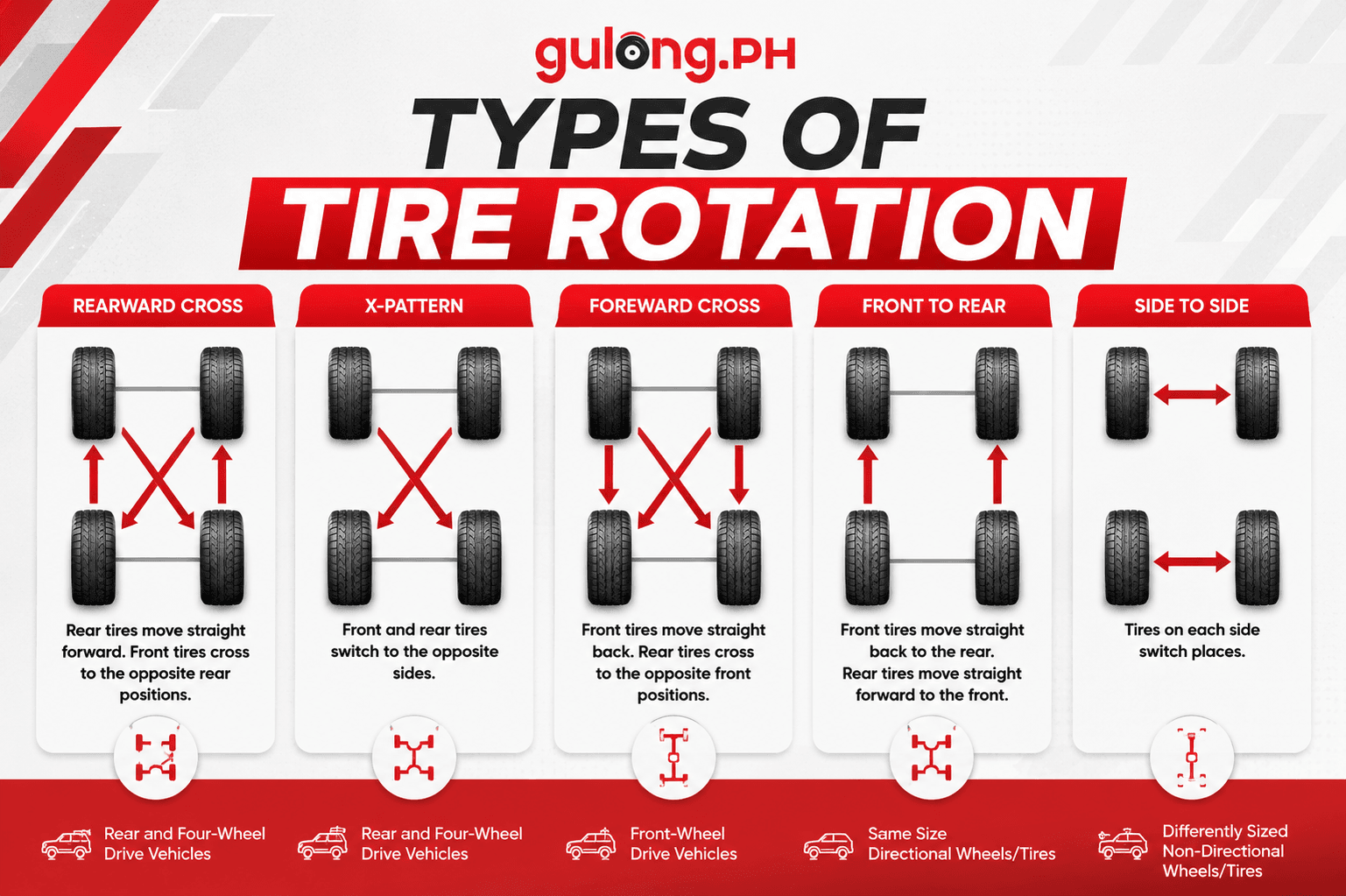
Rearward Cross
Usually used for rear-wheel drive and four-wheel drive vehicles. The rear tires move to the front, while the front tires cross to the rear.
X-Pattern
Often used for some front-wheel drive vehicles. All tires move diagonally to the opposite position.
Forward Cross
Common for front-wheel drive vehicles. Front tires move straight to the rear, while rear tires cross to the front.
Front to Rear
Used for same-size directional tires. Front tires move to the rear, and rear tires move to the front on the same side.
Side to Side
Used for some vehicles with different front and rear tire sizes but non-directional tires. Tires switch left to right on the same axle.
Benefits of Regular Tire Rotation
Regular tire rotation is a small maintenance step, but it can make a big difference in your driving experience and tire expenses.
Better Road Safety
Pantay ang tread means better grip, braking, and stability. This is important during daily drives, highway trips, and rainy weather.
Longer Tire Life
When wear is balanced across all tires, mas tumatagal ang buong set. This helps you get more value from your tire purchase.
Less Vibration and Smoother Ride
Uneven tires can cause vibration and road noise. With regular tire rotation, mas smooth and comfortable ang ride.
More Savings Long-Term
Kapag mas tumatagal ang tires, hindi ka agad gagastos for replacement. Tire rotation helps protect your investment.
What Happens If You Don’t Rotate Your Tires?
Skipping tire rotation can lead to faster and uneven tire wear. At first, hindi siya masyadong halata, pero over time, pwedeng lumala ang wear pattern.
Early Tire Replacement
Kapag mabilis napudpod ang isang pair, you may need to replace tires earlier than expected.
Uneven Tread Wear
Uneven tread can affect road grip, especially on wet or rough roads.
Reduced Grip and Stability
Kapag hindi pantay ang tread, pwedeng maapektuhan ang braking and handling. This can make the vehicle feel less stable.
Possible Alignment or Suspension Issues
Uneven wear can also be a sign of alignment or suspension problems. If you notice uneven tread, have the vehicle checked by a professional.
Ready for a Fresh Set of Tires?
Your tires are a great investment because they help keep you safe on the road. Pero tandaan: kahit gaano ka-premium ang tire brand mo, kung hindi ka nagro-rotate regularly, mas mabilis itong mauuwi sa pudpod tires at uneven tire wear. If your tires are already worn out or no longer safe, it may be time for a fresh set. Shop your tires online at Gulong.ph or visit the Gulong.ph shop to find quality tires that fit your vehicle. You can also explore trusted options like Michelin and BFGoodrich for safer and smoother everyday driving.
FAQs (Frequently Asked Questions)
1. What is tire rotation?
Tire rotation means changing the position of your tires, such as moving front tires to the back, rear tires to the front, or crossing tires to different sides depending on your vehicle and tire type.
2. Gaano kadalas dapat magpa-tire rotation?
A good general rule is every 10,000 km, or based on your vehicle owner’s manual. If you often drive through traffic, rough roads, or long-distance routes, you may need to rotate sooner.
3. Bakit kailangan magpa-tire rotation?
Tire rotation helps prevent uneven tire wear, improves handling, reduces vibration, and helps extend the lifespan of your tires.
4. Ano ang mangyayari kapag hindi ako nagpa-tire rotation?
Kapag hindi ka nagpa-tire rotation, one pair of tires may wear out faster than the others. This can lead to uneven tread, poor handling, vibration, and earlier tire replacement.
5. How do I know if my tires need rotation?
Signs include uneven tire wear, vibration while driving, one side wearing faster, or the car pulling to one side. You can also check your mileage since your last tire rotation.