
Gulong.ph Team Member
Tire Safety Checklist for Filipino Drivers | Gulong.ph
Gulong safety starts with simple habits. Sa biyahe, tiwala sa gulong ang importante, kaya dapat regular mong chine-check kung safe, maayos, at road-ready pa ang tires mo.
Your tires play a big role sa braking, handling, fuel efficiency, at overall safety ng sasakyan. That’s why Gulong.ph created the CARES tire safety checklist para tulungan ang Filipino drivers na madaling alagaan ang kanilang gulong every month.
CARES stands for:
- C – Check Tire Pressure
- A – Assess Tread
- R – Review for Physical Damage
- E – Examine for Uneven Wear
- S – Schedule Tire Rotation
Simple lang siya sundan, pero malaking tulong para maiwasan ang tire problems, sudden blowouts, at unsafe driving conditions.
What Is the Gulong.ph CARES Tire Safety Checklist?
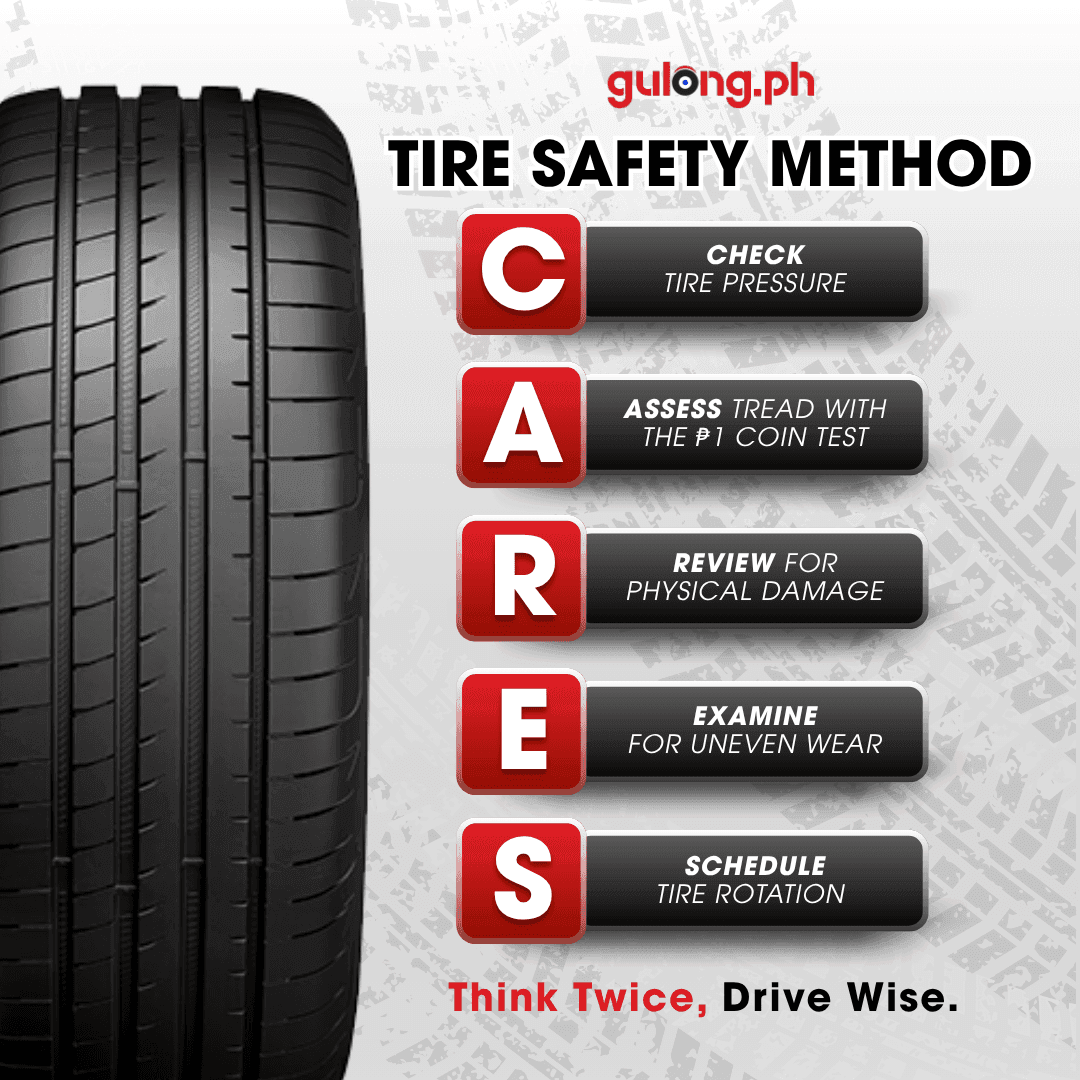
The Gulong.ph CARES method is a simple monthly tire maintenance guide para hindi mo makalimutan ang pinaka-importanteng tire checks.
Hindi kailangan maging car expert para gawin ito. You just need to know what to look for: tamang hangin, sapat na tread, walang damage, pantay ang kain ng gulong, at regular ang tire rotation.
Mas okay na makita ang issue habang maaga pa kaysa abutan ka ng problema habang nasa biyahe.
Why Tire Safety Matters sa Pilipinas
Driving in the Philippines can be tough on your tires. May traffic, lubak, baha, sudden rain, rough roads, at long-distance drives. Kapag hindi maayos ang gulong, mas delikado ang biyahe.
Proper tire maintenance can help improve:
- Road grip
- Braking performance
- Fuel efficiency
- Tire lifespan
- Driving comfort
- Overall safety
Kaya bago bumiyahe, lalo na kung long drive, make tire checking part of your routine. You can also check Gulong.ph’s installation partners if you need help with tire fitting or inspection near your area.
C – Check Tire Pressure
Tire pressure is one of the easiest but most important tire safety checks.
Kapag underinflated ang gulong, mas hirap itong umikot. This can increase rolling resistance, meaning mas mataas ang fuel consumption at mas mabilis mapudpod ang tires.
Kapag overinflated naman, nababawasan ang contact ng gulong sa road. This can affect grip, comfort, and even tire wear.
How to Check Tire Pressure
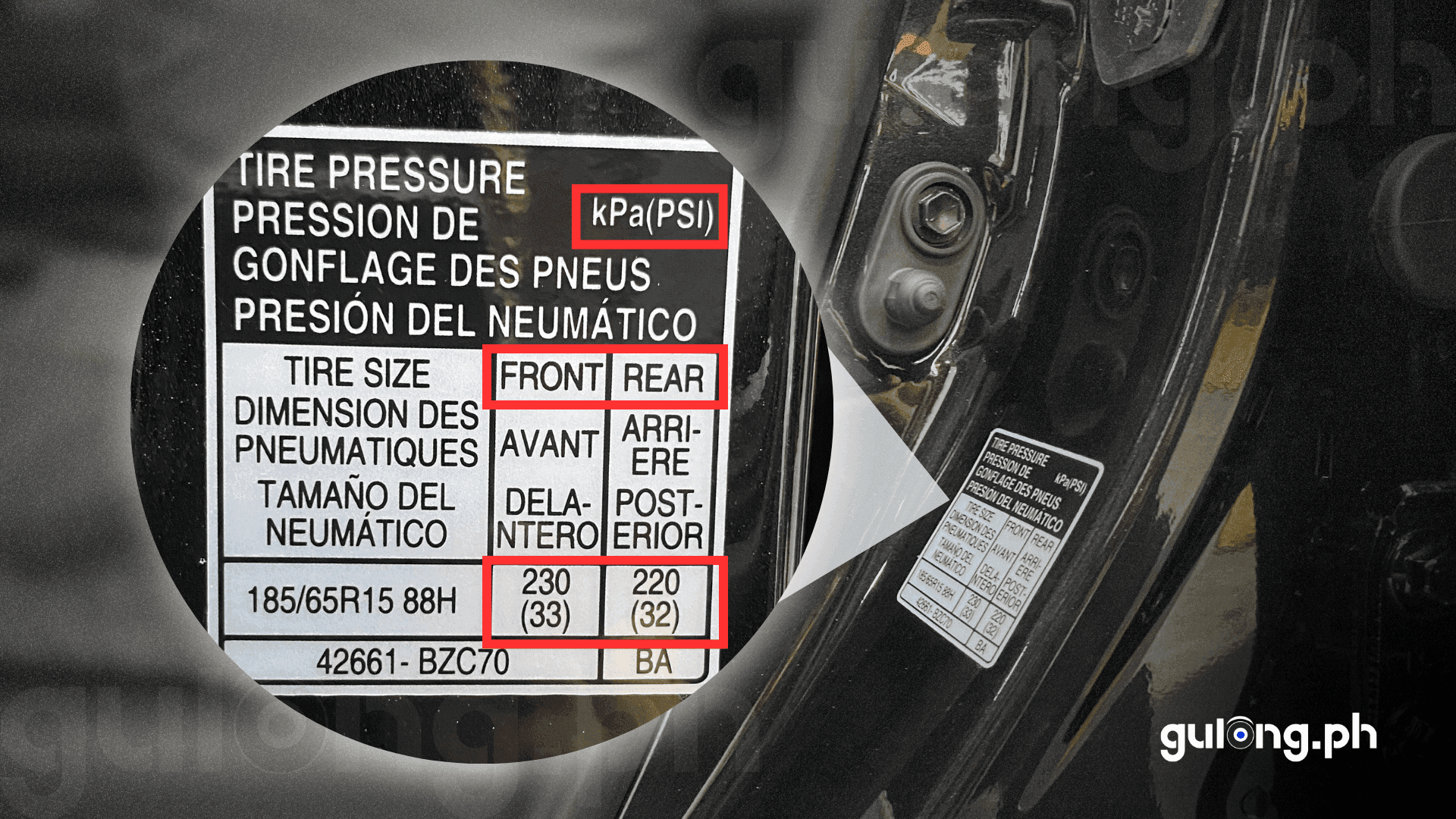
Check your tire pressure before driving or habang malamig pa ang gulong. Kapag uminit na ang tires after driving, pwedeng tumaas ang reading at hindi na accurate.
You can check your recommended PSI sa:
- Driver-side door jamb
- Vehicle owner’s manual
- Tire information label ng sasakyan
Kung hindi ka sure kung anong tire size or type ang fit sa sasakyan mo, you can browse available options sa Gulong.ph shop.
Pro Tip
Huwag gamitin ang PSI number sa tire sidewall as your regular guide. Usually, maximum pressure iyon ng tire, hindi recommended tire pressure for your specific vehicle.
A – Assess Tire Tread
The tread is the part of the tire that grips the road. Kapag manipis na ang tread, mas mahina ang kapit ng gulong, especially kapag basa, maputik, or madulas ang daan.
This is very important sa Pilipinas dahil madalas ang ulan at may areas na prone sa baha.
How to Check Tire Tread
Pwede kang gumamit ng tread depth gauge for a more accurate check. Pero for quick checking, pwede rin ang common Piso Hack.
Ipasok ang coin sa groove ng gulong. Kung masyado ng kita ang ulo sa coin, sign ito na manipis na ang tread at kailangan nang ipa-check ang tire.
Signs of Low Tire Tread
Your tire tread may already be too low kung napapansin mo ang mga ito:
- Mas mahaba ang braking distance
- Poor handling
- Mahina ang grip sa wet roads
- Madaling dumulas sa basa o maputik na daan
- Smooth or kalbo na ang tire surface
- Visible na ang tread wear indicators
Kapag worn out na ang tread, mas safe na palitan ang tire kaysa ipilit gamitin.
R – Review for Physical Damage
Hindi lahat ng tire damage obvious agad. Minsan maliit lang ang crack, tusok, or bukol, pero pwede itong lumala habang ginagamit mo ang sasakyan.
Physical damage can lead to air leaks, weak tire structure, or even sudden tire failure.
Signs to Watch For
Check your tires for:
- Cuts
- Cracks
- Bulges
- Bubbles
- Nails
- Screws
- Glass
- Sidewall damage
When Tire Damage Becomes Serious
Kapag may bulge, bubble, deep cut, or visible damage sa sidewall, huwag balewalain. These can be warning signs na hindi na safe ang tire, especially for high-speed driving or long trips.
If you’re not sure, mas okay na ipa-check agad sa tire expert.
E – Examine for Uneven Wear
Kung hindi pantay ang kain ng gulong, may possible issue sa alignment, suspension, tire pressure, or rotation schedule.
Uneven wear can make your tires wear out faster and affect vehicle control.
Common Signs of Uneven Tire Wear
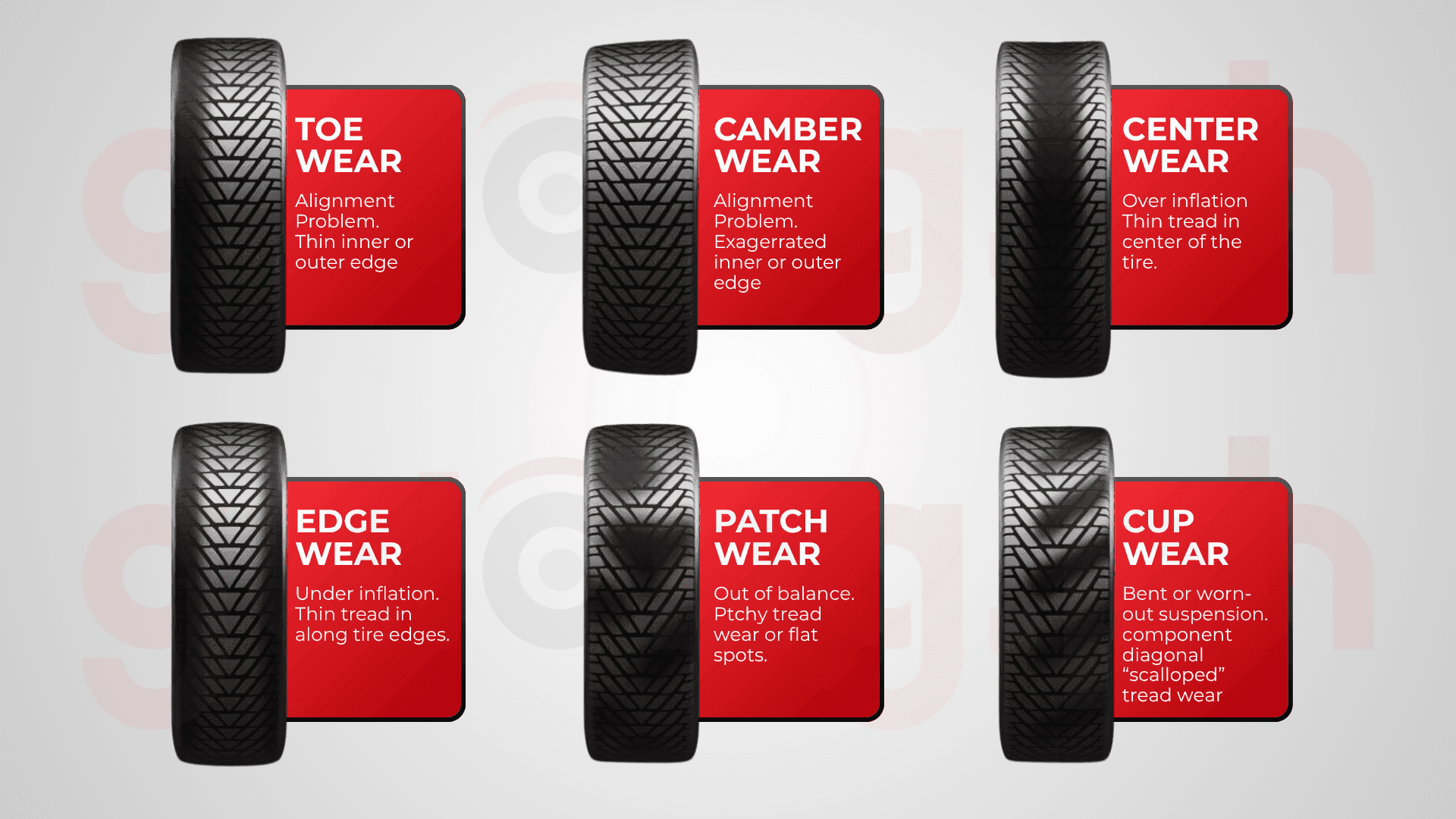
Look for these signs:
- Mas pudpod ang isang side ng tire
- Mas pudpod ang gitna ng tread
- Pudpod ang both outer edges
- Patchy or irregular tread wear
- Vibration habang nag da-drive
- Kumakabig ang sasakyan sa isang side
Why Uneven Wear Is a Problem
Kapag uneven ang wear, mas mahirap i-control ang sasakyan. It can also shorten tire life and lead to premature tire replacement.
If you notice uneven wear, have your tires, wheel alignment, and suspension checked.
S – Schedule Tire Rotation
Tire rotation means nalilipat ang tires sa ibang posisyon ng sasakyan para mas pantay ang wear.
Hindi pare-pareho ang pressure at load na natatanggap ng bawat tire. For example, sa front-wheel drive cars, mas mabilis mapudpod ang front tires dahil sila ang mas involved sa steering and driving force.
How Often Should You Rotate Your Tires?
A good general schedule is every 8,000 to 10,000 km or every 6 months, depending on your driving habits and vehicle type.
Kung lagi kang nasa traffic, rough roads, long drives, or heavy loads, mas okay na ipa-check sooner.
Benefits of Tire Rotation
Regular tire rotation can help:
- Extend tire life
- Improve ride comfort
- Maintain even tread wear
- Support better handling
- Reduce early tire replacement
Tamang rotation means mas sulit ang bawat gulong.
When Should You Ask a Tire Expert?
Ask a tire expert if you notice:
- Frequent tire pressure loss
- Cracks, cuts, or bulges
- Uneven tire wear
- Vibration while driving
- Poor grip
- Longer braking distance
- Tires that look old or worn out
Kung hindi ka sure sa tire condition mo, pwede kang mag-message sa Gulong.ph team. Send a photo or describe the issue, and we’ll help guide you.
Final Tip from Gulong.ph
Your safety is always worth it. Mas panatag ang biyahe kapag alam mong maayos, safe, at alaga ang tires mo including your spare tire.
Before your next drive, remember the Gulong.ph CARES checklist:
Check pressure. Assess tread. Review damage. Examine wear. Schedule rotation.
As part of proper car care, make sure your car tires are regularly inspected before daily drives and long trips. Need new tires for safer everyday driving? Shop your tires online at Gulong.ph and explore trusted options like Michelin tires and BFGoodrich. Kung naghahanap ka ng reliable tire shop, Gulong.ph makes it easier to find quality tires and book convenient tire services for a safer, smoother drive.
FAQ’s (Frequently Asked Questions)
1. How often should I check my tire pressure?
Check your tire pressure at least once a month and before long drives. Mas okay kung chine-check mo ito before driving, habang malamig pa ang tires, para mas accurate ang reading.
2. Saan makikita ang tamang tire pressure ng sasakyan?
Makikita mo usually ang recommended PSI sa driver-side door jamb or sa vehicle owner’s manual. Huwag basta sundin ang PSI sa tire sidewall dahil usually maximum pressure iyon, not the recommended pressure for your car.
3. Paano ko malalaman kung manipis na ang tire tread?
Pwede mong gamitin ang tread depth gauge or Piso Hack. Kapag masyado ng kita ang coin area or mukhang kalbo na ang tire, sign ito na kailangan nang ipa-check or palitan ang gulong.
4. Ano ang common signs na unsafe na ang tires?
Common warning signs include cracks, cuts, bulges, bubbles, nails, uneven wear, low tread, vibration, poor grip, and longer braking distance.
5. Delikado ba ang uneven tire wear?
Yes. Uneven tire wear can affect handling, braking, and tire lifespan. It may also mean may issue sa alignment, suspension, tire pressure, or tire rotation schedule.