Gulong.ph Team Member
How to Tell If Your Tire Pressure Sensor Is Faulty
In some cases, the problem may not be the tire itself. The tire pressure sensor may be faulty, damaged, or no longer communicating properly with the vehicle.
Knowing the difference between an actual tire pressure problem and a sensor issue can help you avoid unnecessary tire problems or repairs.
Here are the common signs that your tire pressure sensor may be faulty.
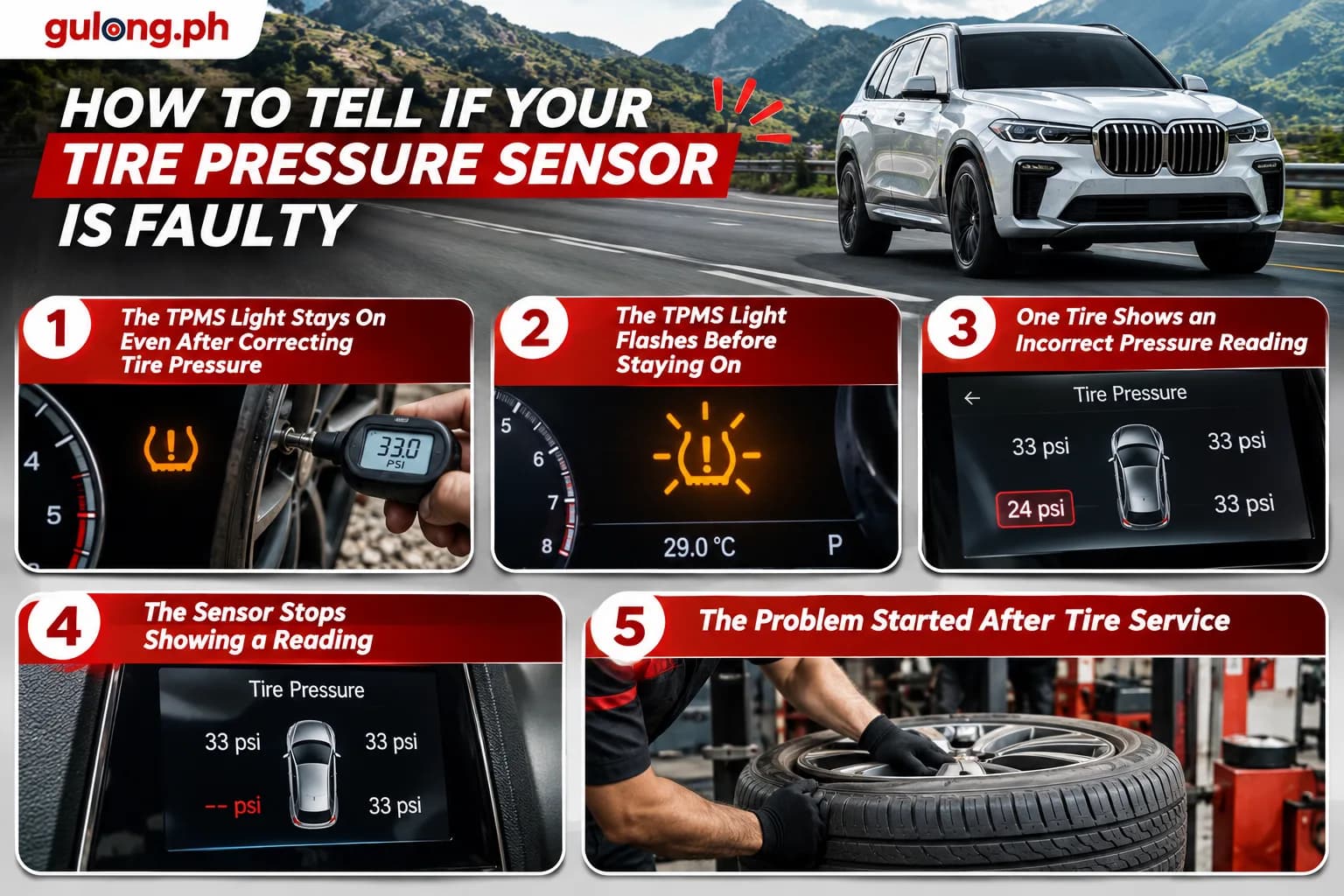
1. The TPMS Light Stays On Even After Correcting Tire Pressure
One of the most common signs is a TPMS warning light that stays on even after all tires have been properly inflated.
First, check the pressure of all four tires using a reliable tire pressure gauge.
If your vehicle has a full-size spare with a sensor, check that tire as well.
Kapag correct naman ang pressure but the warning does not disappear after driving or following the vehicle's reset procedure, the sensor or TPMS system may need inspection.
However, do not immediately assume the sensor is broken. Some vehicles need a short drive before the system updates.
2. The TPMS Light Flashes Before Staying On
A flashing TPMS warning light can indicate a system malfunction rather than simply low tire pressure.
Depending on the vehicle, the light may flash for a short period after startup and then remain illuminated.
This can happen when:
A sensor is not communicating
A sensor battery has failed
The sensor is damaged
There is a TPMS system fault
If the light repeatedly flashes, have the system professionally checked.
3. One Tire Shows an Incorrect Pressure Reading
Some vehicles display individual tire pressure readings on the dashboard.
If one tire shows a pressure that is very different from what you measure manually, there may be a sensor issue.
For example, the dashboard might show that one tire is very low even though a pressure gauge confirms that it is properly inflated.
Compare With a Manual Gauge
Always verify the pressure manually before deciding that the sensor is faulty.
Digital dashboard readings may not update instantly, especially after adding air.
If the difference remains after driving, the sensor may need inspection.
4. The Sensor Stops Showing a Reading
Another possible sign is when one tire suddenly shows no pressure reading at all.
Depending on the vehicle, you may see:
Dashes instead of a pressure number
A missing tire reading
A warning message
TPMS system error
This can mean the sensor is no longer sending a signal to the vehicle.
Possible reasons include sensor damage, battery failure, or a communication issue.
5. The Problem Started After Tire Service
If the TPMS warning started after replacing, rotating, or repairing tires, the issue may be related to the sensor or system setup.
Tire pressure sensors are usually located inside the wheel near the valve stem.
During tire removal or installation, a sensor can sometimes become damaged if proper care is not taken.
Some vehicles may also require the sensors to be relearned or recalibrated after tire service.
If the TPMS warning appeared immediately after a tire change, inform the tire shop.
What Causes Tire Pressure Sensors to Fail?
TPMS sensors do not last forever.
Common causes of failure include:
Dead sensor battery
Physical damage
Corrosion
Valve stem damage
Improper tire installation
Communication issues
Many direct TPMS sensors use small built-in batteries that are not designed to be replaced separately.
Once the battery reaches the end of its life, the complete sensor may need replacement.
How Long Do TPMS Sensors Last?
There is no exact lifespan for every sensor, but sensor batteries can eventually weaken after several years of use.
How long they last depends on:
Sensor design
Vehicle use
Driving frequency
Environmental conditions
Battery condition
Older vehicles with their original sensors may be more likely to experience sensor battery issues.
Can You Drive With a Faulty TPMS Sensor?
A faulty sensor does not automatically mean the tire itself is unsafe.
However, you lose an important warning system that helps alert you to low tire pressure.
Kung hindi gumagana nang tama ang TPMS, you should manually check your tire pressure more frequently until the system is repaired.
Do not ignore actual tire pressure just because you suspect the sensor is faulty.
How to Check Before Replacing the Sensor
Before replacing a TPMS sensor, follow these basic steps.
Check All Tire Pressures
Use a tire pressure gauge and compare the readings with the vehicle manufacturer's recommended pressure.
Drive the Vehicle
Some systems need several minutes of driving before updated pressure readings appear.
Follow the TPMS Reset Procedure
Certain vehicles have a reset or relearn process.
Check your owner's manual for the correct procedure.
Have the System Scanned
A tire shop or service center with a TPMS diagnostic tool can identify which sensor is not communicating properly.
This is usually the best way to confirm the problem before replacing parts.
TPMS Sensor vs Low Tire Pressure: What's the Difference?
A steady warning light often means the system has detected low tire pressure.
A flashing light or missing sensor reading may indicate a TPMS malfunction.
However, warning behavior varies between vehicles.
That is why you should always check the actual tire pressure first instead of relying only on the dashboard warning.
Conclusion
A tire pressure sensor may be faulty if the TPMS light stays on despite correct tire pressure, flashes repeatedly, shows incorrect readings, or stops displaying one tire completely.
Before replacing the sensor, manually check the tire pressure, follow the vehicle's reset procedure, and have the TPMS system scanned if necessary.
Proper tire pressure is still important whether or not your TPMS is working correctly.
If your tire pressure sensor is showing signs of malfunction, it's important to have it checked to ensure accurate tire pressure monitoring and safer driving. Visit gulong.ph for helpful tire maintenance tips and recommendations. You can also shop for new tires here to explore available tire brands, sizes, and prices that suit your vehicle, driving needs, and budget.
For more tire options, you can explore Michelin tires in the Philippines or compare available BFGoodrich tires based on your vehicle and driving needs.
You can also read our guides on How to Read Tire Size, Tire Pressure Guide, Tire Rotation Guide, and What to Look for When Buying New Tires for more helpful tire information.
Frequently Asked Questions
1. How do I know if my TPMS sensor is bad?
Common signs include a flashing TPMS light, incorrect pressure readings, missing readings, or a warning that remains after correcting tire pressure.
2. Can a TPMS sensor give a false low-pressure warning?
Yes. A faulty or malfunctioning sensor can sometimes display an incorrect reading, but always verify the tire pressure manually first.
3. Do TPMS sensor batteries run out?
Yes. Many TPMS sensors use internal batteries that eventually lose power after several years.
4. Can tire replacement damage a TPMS sensor?
It can happen if the sensor is accidentally damaged during tire removal or installation, although proper tire service should reduce this risk.
5. Do I need to replace the sensor if the TPMS light is on?
Not always. The problem may simply be low tire pressure or a system that needs resetting. Have the sensor diagnosed before replacing it.