Gulong.ph Team Member
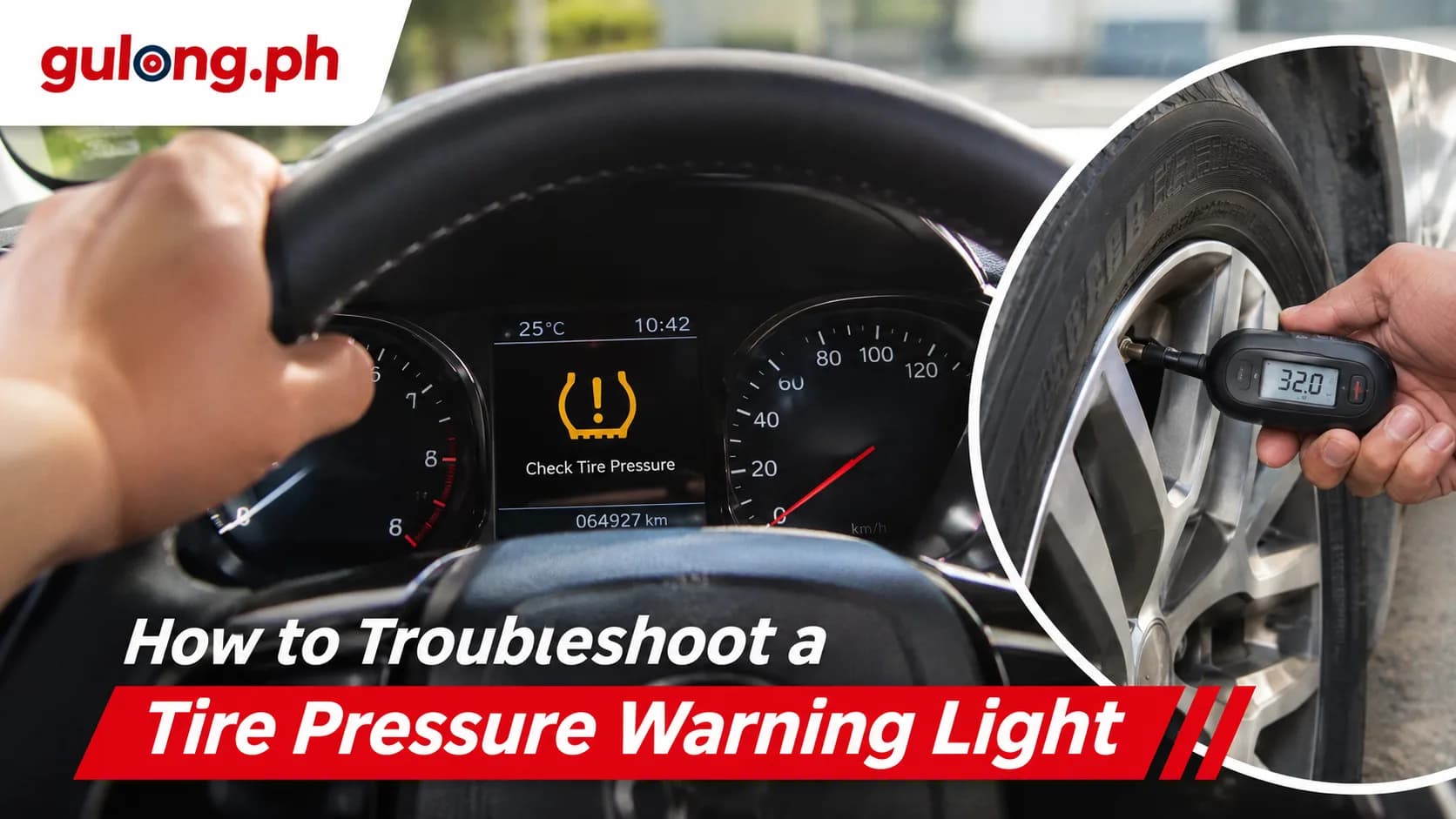
How to Troubleshoot a Tire Pressure Warning Light
In many cases, the warning simply means one or more tires have low pressure. Pero minsan, puwede rin itong related sa temperature changes, a slow leak, or a problem with the tire pressure monitoring system (TPMS).
The best approach is to check the actual tire condition first before assuming there is a sensor problem.
Here’s a simple way to troubleshoot a tire pressure warning light.
1. Check the Tire Pressure Manually
Start by checking the pressure of all four tires using a reliable tire pressure gauge.
Do this while the tires are cold, ideally before driving for a long period.
Compare the readings with the recommended tire pressure for your vehicle.
You can usually find this information on:
Driver’s side door jamb
Owner’s manual
Tire information label
Huwag gamitin ang maximum pressure printed on the tire sidewall as your normal target.
Check All Tires
Do not inspect only the tire that looks low.
One tire can lose pressure without appearing visibly flat, so it is better to check the entire set.
If your vehicle monitors a full-size spare tire, inspect that as well.
2. Add Air If the Pressure Is Low
If one or more tires are below the recommended pressure, add air until they reach the correct level.
After adjusting the pressure, drive the vehicle for a short distance.
Some TPMS systems do not update immediately and may need several minutes of driving before the warning light turns off.
Kung nawawala ang warning after correcting the pressure, the issue was likely caused by low tire pressure.
3. Check for a Possible Leak
If the warning light returns after a few days, one of the tires may have a slow leak.
Possible causes include:
Nail or screw puncture
Damaged valve stem
Poor wheel seal
Tire damage
Rim damage
If you keep adding air to the same tire, have it inspected instead of simply topping it up repeatedly.
A small puncture may be repairable depending on its location and condition.
4. Consider Temperature Changes
Tire pressure can change when the temperature changes.
When the weather becomes cooler, tire pressure may decrease.
This can sometimes trigger the warning light even if there is no puncture.
Sa Philippines, sudden weather changes are less extreme compared with colder countries, but pressure can still fluctuate due to temperature, long drives, and changing conditions.
That is why regular manual pressure checks are still important.
5. Look at How the TPMS Light Behaves
The way the warning light appears can sometimes give you a clue.
Steady Warning Light
A steady TPMS light often means the system has detected low tire pressure.
Check all tires first.
Flashing Warning Light
If the light flashes for a while and then stays on, it may indicate a TPMS system malfunction.
Possible causes include:
Faulty tire pressure sensor
Sensor battery failure
Communication problem
Sensor not properly programmed
Warning behavior can vary by vehicle, so check your owner’s manual for the exact meaning.
6. Check If the Warning Started After Tire Service
If the light appeared after tire rotation, replacement, repair, or wheel service, the TPMS may need recalibration or relearning.
Some vehicles automatically recognize the sensors after driving.
Others may need a specific reset procedure.
There is also a possibility that a sensor was damaged during tire removal or installation.
If the problem started immediately after tire service, let the shop know.
7. Try the Vehicle’s TPMS Reset Procedure
Some vehicles allow you to reset the TPMS after correcting tire pressure.
The procedure varies depending on the vehicle.
It may involve:
A TPMS reset button
Dashboard settings
Infotainment menu
A specific driving procedure
Do not reset the system while a tire is still underinflated.
First, confirm that all tires are at the correct pressure.
Then follow the instructions in your owner’s manual.
8. Inspect the Tires for Visible Damage
A warning light should also be treated as a reminder to inspect the physical condition of your tires.
Look for:
Nails or screws
Cuts
Cracks
Bulges
Uneven wear
Very low tread depth
Kung may visible damage, have the tire checked even if the pressure appears normal.
Some tire problems may worsen over time.
9. Have the TPMS System Diagnosed
If all tires have the correct pressure but the warning keeps returning, the TPMS itself may have a problem.
A tire shop or service center with a TPMS diagnostic tool can check which sensor is communicating properly and which one may have failed.
This is more reliable than replacing a sensor based only on the dashboard warning.
Can You Drive With the Tire Pressure Light On?
It depends on the cause.
If a tire is significantly underinflated, avoid continuing a long or high-speed drive until the problem is corrected.
Low pressure can affect handling, tire wear, fuel efficiency, and heat buildup.
If the tires are properly inflated and the issue is confirmed to be a faulty sensor, the vehicle may still be drivable, but you lose an important warning system.
Until the TPMS is repaired, check your tire pressure manually more often.
Conclusion
A tire pressure warning light should not be ignored, but it does not always mean there is a major tire problem.
Start by manually checking the tire pressure. If the pressure keeps dropping, inspect for a leak. If the readings are correct but the warning remains, the issue may involve the TPMS sensor or system.
Regular tire checks can help you catch problems before they become more serious.
If your tire pressure warning light stays on or keeps coming back, it's important to check your tire pressure and identify the possible cause to ensure safe driving. Visit gulong.ph for helpful tire maintenance guides and tips. If your tires are already showing signs of damage or excessive wear, you can also shop for new tires here to compare available tire brands, sizes, and prices based on your vehicle, driving needs, and budget.
For more tire options, you can explore Michelin tires in the Philippines or compare available BFGoodrich tires based on your vehicle and driving needs.
You can also read our guides on How to Read Tire Size, Tire Pressure Guide, Tire Rotation Guide, and What to Look for When Buying New Tires for more helpful tire information.
Frequently Asked Questions
1. Why is my tire pressure warning light on?
The most common reason is low tire pressure, but it can also be caused by a slow leak, temperature change, or TPMS system problem.
2. Why is the TPMS light still on after adding air?
The system may need time to update, or your vehicle may require a reset or relearn procedure.
3. What does a flashing tire pressure light mean?
A flashing TPMS light often indicates a system malfunction, such as a faulty sensor or communication issue.
4. Can a nail in the tire trigger the warning light?
Yes. A nail or screw can cause a slow leak, which may gradually reduce tire pressure and activate the warning.
5. Should I reset the TPMS before checking the tires?
No. Always check and correct the actual tire pressure first before resetting the TPMS.